

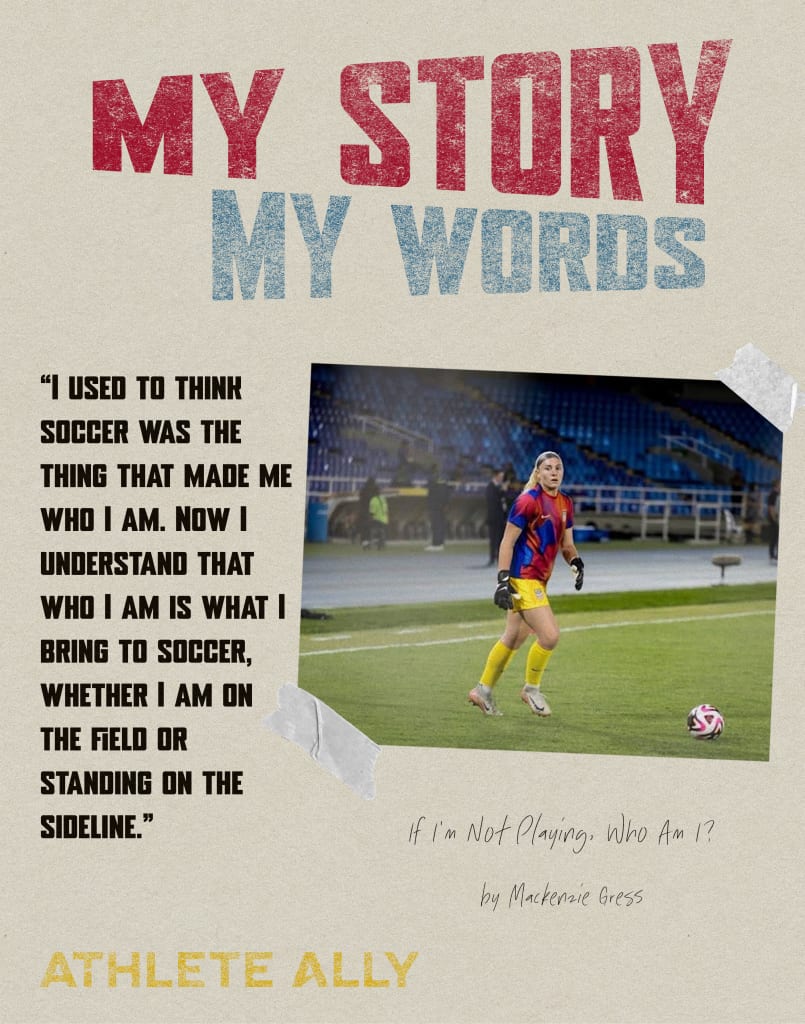
Growing up, I was always Mackenzie Gress, the soccer player. I was a good soccer player who spent all her time and energy trying to be the best goalkeeper she could be. That is what everyone knew me as, and that’s exactly how I wanted it to be. The issue with that is that it was exactly how I saw myself, too: just a soccer player. And when you only see yourself as a soccer player, the only thing you care about is playing soccer.
My freshman year of college, the plan was always to take a redshirt year. As a goalkeeper, it is rare to start your freshman year, especially at a program like Penn State, because of the experience it takes and the relationships that need to be built.
So when I didn’t play my freshman year, it was hard, but I always expected it to happen. I knew my role, I was content with my role, and I was preparing to play my sophomore year and be the best I could be.
When I found out that our starting goalkeeper was returning for her sixth year of eligibility, it wrecked me. How is this happening to me? I need to be playing. Do I need to transfer? Why did I come here? How am I going to be able to put a smile on my face?
When all you know about your identity is that you play soccer, it gives you nothing to fall back on. And 18-year-old me thought that not playing my sophomore year was the worst possible-case scenario. Little did I know it would teach me a lesson that I desperately needed to learn: your playing time and athletic career do not determine the person you are. It took me a really long time to figure this out. By the time the season rolled around, I was at the lowest emotional point I had ever been. I didn’t know how to separate my disappointment from my sense of self. Every day, I watched someone else do the thing I had spent my entire life working toward, and I felt like I was falling behind. I struggled to understand what I was supposed to feel proud of when the one thing I had always used to measure myself wasn’t happening.
My mom connected me with a mental performance coach who helped me slowly rebuild my confidence and learn who I was. I was not Mackenzie Gress, the soccer player. I was Mackenzie Gress: the friend, teammate, and daughter who is kind, tenacious, determined, and caring no matter what happened on the soccer field. Because when you know exactly who you are and what your character is, that is what you fall back on when things get hard. And when things get hard, who you are and your character should never waver.
That sophomore season, my mentality shifted from “I need to play” to “How can I impact people?” I poured myself into the team. I stayed out with the attacking players to help them with their shooting, sent film, spent time with my teammates, and became a shoulder to lean on. I still wanted to play. I still had days when sitting on the bench hurt. But I learned to let go of the outcome and show up each day with the same effort and attitude, focusing on being the best version of myself that I could be.
The lessons I learned and the perspective I gained during my sophomore year proved to be incredibly useful during my junior year, when I went to the 2024 FIFA U-20 Women’s World Cup with the United States Youth National Team. After almost two years of camps, I was named to the final roster for the U-20 World Cup, something I had always dreamed of. While we were in Colombia, where the tournament was being held, I got a concussion during training before the tournament started, which sidelined me for more than two weeks.
I had a choice to make: Would I fall back into the same trap I did my sophomore year, or would I continue to be the person I knew I was?
It was incredibly hard to watch my dream of playing in a U-20 World Cup game go away. But I knew who I was regardless of my playing time, and my character did not waver. I consistently showed up and made the choice to impact those around me—to push them to be the best they could be on and off the field, to give them positive energy when they needed it, and to be the teammate they knew they could rely on.
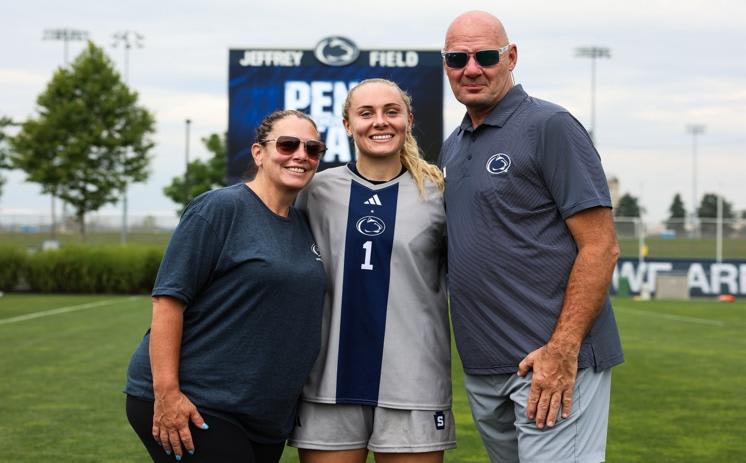
The difference between the girl who sat on the bench her sophomore year and the girl standing on the sideline in Colombia was not that one cared more about soccer than the other. I still desperately wanted to play. The difference was that sophomore-year me believed that not playing meant I was losing a part of myself. By the time I reached the World Cup, I understood that soccer could be something I loved deeply I still am a goalkeeper. I still want to play. I still want to compete at the highest level. But I am also a daughter, a friend, a teammate, a leader, and a person whose worth doesn’t change when I step on or off the field. I used to think soccer was the thing that made me who I am. Now I understand that who I am is what I bring to soccer, whether I am on the field or standing on the sideline.